Episode 94
Can Animals Talk Back? Exploring Animal Communication with Denise Dunlavy
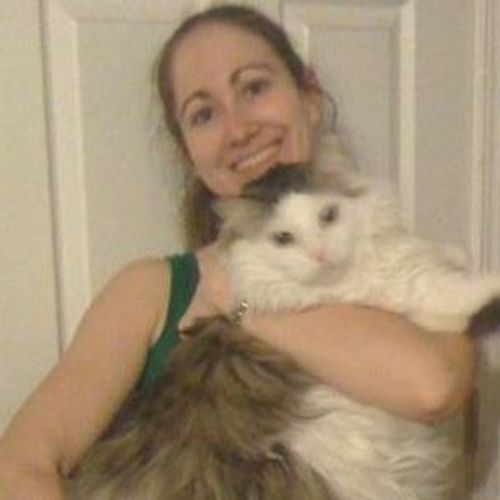
Have you ever felt like your pet understood you without a word being spoken? In this fascinating episode of Animal Posse, Dixie sits down with animal communicator Denise Dunlavy to explore the mysterious world of animal communication.
Denise shares her journey from corporate accountant to professional animal communicator and explains how she believes animals communicate through energy, images, feelings, and intuition rather than words. Together, Dixie and Denise discuss how this approach may help rescue animals, fearful feral kittens, adoption matching, behavioral challenges, and strengthening the bond between people and their pets.
The conversation also dives into some of the most emotional topics pet owners face, including lost pets, end-of-life decisions, grief, and Denise's work connecting with animals who have crossed over. Whether you're a dedicated believer, a curious skeptic, or simply someone who loves animals, this episode offers a thoughtful look at the connections we share with the pets who change our lives.
Guest: Denise Dunlavy, Animal Communicator and PSYCH-K ® Facilitator
Website: intuitivedenise.com
Whether you're looking for insight, comfort, or a new perspective on the animals you love, this is an episode you won't want to miss. 🐾
Transcript
Welcome back to Animal Posse, where we talk about the animals who
Dixie:change our lives and the people who dedicate theirs to making a difference.
Dixie:Have you ever looked into your pet's eyes and felt like they were trying to tell
Dixie:you something, or lost a beloved animal and wondered whether that connection could
Dixie:somehow continue even after they're gone?
Dixie:Today's guest believes that animals have a lot more to
Dixie:communicate than we might realize.
Dixie:I'm joined by Denise Dunlavy.
Dixie:, An animal communicator who works with animals both living and in spirit.
Dixie:We're going to talk about what animal communication is, how Denise believes
Dixie:it works, and what our rescue animals might be trying to tell us, and
Dixie:whether the bond we share with our pets truly ends when they leave us.
Dixie:Whether you're a believer, a skeptic, or simply curious, I think
Dixie:you'll enjoy this conversation.
Dixie:Hi, Denise.
Dixie:Thank you so much for coming on the show.
Dixie:I'm excited to hear all about this.
Dixie:You spent years working as an accountant.
Dixie:How did you go from working with numbers to communicating with animals?
Denise:It's interesting.
Denise:It's definitely using different parts of my brain, but I never
Denise:really liked accounting and I never fit into the corporate world.
Denise:So right from the beginning, I felt like there was something wrong with me.
Denise:Like, why can't I just go to work and be satisfied and just
Denise:be happy with what I have?
Denise:But I always felt like I had a bigger purpose and there was
Denise:something else I was called to do.
Denise:It-- But I didn't know what that was.
Denise:So for me, it took a lot of experimenting, and I just happened to
Denise:find an animal communication teacher.
Denise:I didn't know I could communicate with animals until I tried it.
Denise:That was really the biggest thing.
Denise:So I had also been certified in animal massage because I knew I
Denise:wanted to do something with animals, but I was "Oh, what's it gonna be?"
Denise:And I think anyone can learn it, but I had a really good teacher who
Denise:helped me and encouraged me, and after a lot of practice, I figured
Denise:out that th- this is real, that I am actually understanding things that
Denise:not everyone knows about animals.
Denise:And I practiced for several years until my teacher actually
Denise:encouraged me to do it professionally
Dixie:What was the turning point that led you to animal
Dixie:communication, or I guess that you wanted to do a career with animals?
Denise:There's something about communicating with animals that it…
Denise:One, it's on a different level.
Denise:It you're raising your frequency and just shifting your vibration, and
Denise:that just felt so much better to me.
Denise:Sitting in a cube was always uncomfortable.
Denise:It felt like a trap to me, like I was stuck in a cage.
Denise:And this made me feel free.
Denise:But I think the turning point was when, so I actually used to practice on this, this
Denise:website where they posted pets that were available to talk to, and they had answers
Denise:to some typical questions that you might ask, like what kind of food do they eat,
Denise:where do they sleep, who are their people.
Denise:And I was practicing there, but I kept getting the answers wrong, and
Denise:I was getting really frustrated.
Denise:But I ha- I talked to this dog named Nacho, and I got a
Denise:very clear image in my head.
Denise:And so I was-- decided to be brave and went to their person and I said,
Denise:"I saw this image," and it looked like a pillow that was plaid on one
Denise:side and green on the other side.
Denise:And I said, "Does this mean anything to you?"
Denise:And they this was over email, they wrote back to me and they sent me a picture,
Denise:and it was actually the view from Nacho's kennel, and it was actually two blankets.
Denise:One was a brown plaid and the other one was a, a green Oregon Ducks blanket, and
Denise:it was the exact image that I had seen.
Denise:And it…
Denise:I don't know if I would've believed it if I didn't have some kind of proof in
Denise:front of my eyes that this was actually real, and it gives me goosebumps just
Denise:thinking about it, that there, there's a magic that happens when you're like, "Oh,
Denise:they actually communicated this with me."
Denise:So from that, I learned that animals communicate in the way
Denise:that they want to communicate.
Denise:So even though there were things I was getting wrong, I was actually getting the
Denise:messages that they wanted to get across.
Denise:So that was when I really thought, "Oh, maybe I can do something with this."
Dixie:That's very interesting.
Dixie:And to get that image and then to have the person show you that image,
Dixie:that gives me goosebumps actually.
Dixie:That's amazing.
Denise:Yes.
Denise:And h- honestly, I wouldn't do this if I didn't get confirmation,
Denise:but it has happened so many times that there's something strange.
Denise:Like the other day, a cat was showing me laying on shoes, and I, so I
Denise:asked the person and they said, "Oh my gosh, the cat does this all
Denise:the time, loves to lay on shoes."
Denise:And I, th- that's the reason that I do it, is because I have enough
Denise:confirmation from people that say, "Yes, that is absolutely my animal."
Denise:Otherwise, I don't think I would be able to do it.
Dixie:For people who are new to animal communication and even some like skeptics
Dixie:that might be out there, I know that they're hearing this and this is just
Dixie:like probably like really difficult for them to understand like how this is done.
Dixie:Can you explain animal communication in a nutshell?
Denise:Sure.
Denise:The way that I like to explain it is communicating with another
Denise:being without using words.
Denise:And the easiest way I can describe it is that whenever I talk to a pet parent
Denise:and I describe their pet's personality, they can either say, "Yes, absolutely,
Denise:that's them," or, "No, it's not."
Denise:And that tells me that pet parent is communicating with their pet all the time.
Denise:They just don't know how they're doing it.
Denise:They don't know how they know the pet's personality, and obviously
Denise:they show us through body language or through their actions.
Denise:They, they pick the toys that they like.
Denise:I am just doing this by connecting with energy in another
Denise:way that doesn't use words.
Denise:Honestly, I can't tell you exactly how it works.
Denise:And I wouldn't believe it if I didn't have these experiences
Denise:of people confirming things.
Denise:But what most animal communicators do is tune in to their other senses.
Denise:So we are using our our intuitive mind's eye and and ears and
Denise:tuning into what we know.
Denise:So often I get information just from looking at a pet's picture.
Denise:I can see a picture, and I know exactly what that animal would do.
Denise:Now, I don't know exactly how.
Denise:It's some kind of physics.
Denise:It's because we're all made of energy, and I don't expect to have all the answers.
Denise:But my suggestion to people that are skeptics is to think about their
Denise:own experience with their pets and what do you already know about them?
Denise:And I would bet they can make a huge list of things that they know
Denise:about their pet without using words.
Dixie:Yeah, that's a great way to describe that.
Dixie:I do animal communication more on a hobby basis.
Dixie:I took all the classes for that.
Dixie:It was something that really fascinated me, and I've had some
Dixie:experiences that are unbelievable, too.
Dixie:I actually, would go ask for people to practice, and so there was people
Dixie:that I knew, and I practiced with them.
Dixie:And some of the things that came back to me was it was amazing and same thing it…
Dixie:They got the confirmation that they were seeking.
Dixie:And I always like to tell people, like, when they're like, "Oh, this is crazy.
Dixie:This doesn't sound like something that could actually happen."
Dixie:But like you said, people know their pet's personality.
Dixie:You intuitively know things about your pet.
Dixie:And another example,
Dixie:Especially with a cat, it might be a little bit different with a dog, but when
Dixie:you have to go bring a cat to the vet The cat knows that the cat is going to the
Dixie:vet before you even bring the carrier out
Denise:That is absolutely right.
Denise:They know, and we don't know how they know, right?
Denise:It's hard to explain.
Denise:But there's d- just like a dog too.
Denise:If you're going to a dog park or like they understand some words, but also
Denise:you barely have to say anything before they already know where you're going.
Dixie:Yeah, absolutely.
Dixie:And I think a lot of the times people associate like, "Oh I said
Dixie:the word vet, I'm not gonna say it this time," or, "I said the word dog
Dixie:park, I'm not gonna say it this time."
Dixie:But if you experiment with that yourself and you don't
Dixie:say anything at all, they know.
Dixie:They still absolutely know.
Denise:You're right, and that is, another suggestion I would make to people
Denise:that are skeptical is to play with it.
Denise:Try showing your pet an image.
Denise:Show them a toy and see if in the next couple hours they go pick up that toy.
Denise:It should be fun.
Denise:It should be something enjoyable.
Denise:I think that some people…
Denise:I teach animal communication as well, and some people when they're learning,
Denise:they're trying so hard to get a message.
Denise:They're, they're-- they want something super clear to come through, and I think
Denise:that when we put a lot of pressure on it, it m- can make it more difficult.
Denise:So I recommend just having fun with it.
Denise:Try playing with it.
Denise:Try seeing if you can tell your pet something with- without saying it.
Dixie:I would like to talk now about rescue animals and their emotions and
Dixie:how you believe communicating with animals could benefit rescue animals.
Denise:So I have-- my, my two cats are foster fails.
Denise:I thought, "Oh, yes, I can absolutely foster," and then when it was time
Denise:to give them up, I couldn't do it.
Denise:But what that taught me is that I got to know so much about them.
Denise:That's part of the reason that I couldn't give them up was
Denise:now I know their personalities.
Denise:I know what they need.
Denise:I know what they want.
Denise:And so my suggestion when working with adoptions is to encourage the
Denise:animal to choose what they want.
Denise:They can start to manifest the home that they're looking for, and I don't
Denise:think that they necessarily know that or that that we realize that's an option.
Denise:But I absolutely believe that our pets find us for a reason.
Denise:Most people that I work with, after they've had their pet for a little while,
Denise:they say, "Oh, this is my soul pet," or, I know what they've come here to teach me."
Denise:And so I especially-- I know you work with a lot of kittens, and I don't know that
Denise:kittens fully know their purpose yet, but they can help find their people by putting
Denise:the frequency out there or the energy.
Denise:From a rescuer perspective, when you're working with these young
Denise:kittens or new rescues that are looking for homes, I would ask them.
Denise:I would say, "What do you want?
Denise:Do you want a home with kids?
Denise:Do you want a home with other pets?
Denise:Do you wanna be outside?"
Denise:I would start talking to them about all those possibilities so that they
Denise:can start choosing what they want.
Dixie:That's a very good suggestion, and I will say for me personally, I do
Dixie:find that I use that a bit in my rescue.
Dixie:I have not specifically asked that question, but I know a lot of the
Dixie:times I intuitively will feel it.
Dixie:And for me, I always say it's an energy thing.
Dixie:It's like they'll put off a certain energy so that when I'm looking for a
Dixie:home for them, I'm trying to look for somebody that has that similar energy.
Dixie:But I've also seen it where people will come, say, to the adoption center,
Dixie:and you can just see that the cat automatically clicks with this person.
Dixie:And it's like, to me, they're making that choice that, "Okay, I
Dixie:wanna go home with that person."
Dixie:And, a lot of the times I like to consider that, more if somebody comes to, to look
Dixie:at one and I see the other one might be really interested in this person, I'll
Dixie:try to steer 'em over to that cat, and a lot of the times it will actually work.
Dixie:And then they end up do- do getting great homes, so what would you say
Dixie:for people when they go to ask puppies or kittens, "Hey, what do you want?"
Dixie:Or do you have any more recommendations on how they should handle that?
Denise:The first thing is just asking the question, because I think that sometimes
Denise:animals don't realize they have a choice.
Denise:So by putting that out there, it helps them to start thinking about it.
Denise:I also think that you, most of your rescuers probably can intuitively
Denise:know a little bit about the personalities of the animals, and
Denise:so just using that as a match.
Denise:But what you said resonates so much because a lot of it is energy.
Denise:It's unexplainable, and I know a lot of people who have said, "I
Denise:saw a picture online of this cat, and I knew I had to have them."
Denise:And so it's good that you can recognize that, and you've probably been doing
Denise:this long enough that your intuition a- already knows these things.
Denise:And I think that people are not tuned into intuition don't realize that
Denise:there is that energetic connection.
Denise:So I would recommend that you tell people or ask them, "How does it feel?
Denise:How does this pet feel to you?"
Denise:Because they might be thinking with their head "Oh, they look
Denise:cute," or, "They look playful."
Denise:So they think they're using their eyes as judgment, and really, it's
Denise:more of a feeling that people get.
Denise:So that, I guess that's the one little thing that maybe you can change is
Denise:like, how does this pet feel for you?
Dixie:Yeah, I understand what you're saying exactly with that, and
Dixie:especially with the intuition that you mentioned, 'cause I know a lot of a-
Dixie:adoption groups, that are out there, they tend to do more things on paper.
Dixie:Of course we have an application process, but I always want the cat
Dixie:to meet the person ahead of time.
Dixie:So if you come out and you meet that cat and I don't think it's
Dixie:a good match, I'm gonna say no.
Dixie:Whereas I think there's other groups that they'll look at certain check boxes.
Dixie:And if you can select off all the appropriate check boxes,
Dixie:then it's like they're just gonna send the animal home with you.
Dixie:And I know sometimes they might get really good matches, but other times
Dixie:they might not get such good ones because you're going on people who are looking
Dixie:on looks alone, and it might be that one cat maybe brings you to a group, but
Dixie:maybe that's not the one that's meant for you, if you think that makes sense.
Denise:And I would bet that those rescues that are just checking off boxes have
Denise:a lot more return animals or rehoming situations where they're trying it out
Denise:to see if it works and then deciding.
Denise:And I think that the cats that come into your world are very lucky to have found
Denise:you because you are using your intuition to help place them, regardless of whether
Denise:you are thinking about it that way
Dixie:Now, how else do you think this could benefit rescue pets that
Dixie:might be coming from a bad situation?
Dixie:Because when we get rescues in, sometimes you're getting puppies and kittens that
Dixie:are so young that they don't know, but other times you might have some that
Dixie:have come from a very bad situation or a very neglectful abuse situation.
Dixie:So do you approach that any differently?
Denise:I do because I might focus more on talking to them, on what can
Denise:I tell this animal, because we often go in as animal communicators trying
Denise:to get information or trying to learn something, and in that case, the
Denise:animal might not wanna stay very much.
Denise:They might be a little shut down or definitely scared.
Denise:And so you can use animal communication to let them know that they're safe
Denise:now and that whatever happened to them before is not going to happen again
Denise:because you're taking care of them.
Denise:So w- I think that touch is also really helpful because they feel that energy,
Denise:and they're going to recognize that you have good intentions and good energy.
Denise:But also then being able to talk to them is really helpful.
Denise:So for anyone who thinks they don't have this ability or just misses
Denise:it, I would say instead of trying to get messages, try giving them.
Denise:And I would suggest using images, using words, using
Denise:feelings to talk to the animal.
Denise:And that might help them get adopted because just that shift
Denise:in energy or intention lets them know that they're safe.
Dixie:Okay, so I have another question for you, and this is based
Dixie:on something that I heard years ago.
Dixie:I can't remember exactly where I heard it, but it's something like…
Dixie:Okay, so let's say I'm getting in a kitten that's a partially feral kitten.
Dixie:So when it comes into me it's gonna be absolutely terrified.
Dixie:Now, in the rescue world, of course, if we get a kitten that might be like
Dixie:five weeks, six weeks, and they're terrified like that, usually we can
Dixie:turn them around like right away.
Dixie:But if you're dealing with a kitten that's a little bit older that's, say,
Dixie:like an eight-week-old kitten and it's coming in from a feral colony, it wasn't
Dixie:in a safe area, so that's the only reason that you really wanna take them
Dixie:away from that because, maybe it's a busy street or something like that, so
Dixie:there's a lot of dangers to the cat.
Dixie:When we get those in, those are very hard to work with.
Dixie:They're very fearful.
Dixie:And I've always heard that when you're speaking with them, you wanna tell them
Dixie:the things like you said "You're safe."
Dixie:You don't wanna say, "Oh, don't be scared," because the scare
Dixie:part is associated with fear.
Dixie:Have you heard anything like that, or do you have any advice for that?
Denise:Oh, yes.
Denise:I-- this is one of my biggest things that I preach is always focus on the
Denise:feeling or the behavior that you want.
Denise:They don't always understand "don't," or you could end up reinforcing something.
Denise:So if you say "Don't pee on the floor," th-that's what they hear is pee on the
Denise:floor, so they will continue to do that.
Denise:And I bring that up because that's something that happens a lot.
Denise:We focus in my practice a lot on we only use the litter box so that,
Denise:that's something that I say often.
Denise:So when you're working with an animal like that who's really scared,
Denise:focus on how you want them to feel.
Denise:So send them feelings of safety.
Denise:Just imagine it in your body.
Denise:So if you're feeling it, they almost get to experience it through you.
Denise:So I encourage people to imagine what it feels like to be in
Denise:the most comfortable space.
Denise:Imagine what it feels like to know that you're safe.
Denise:Or imagine the best possible feeling when you're in your bed and
Denise:you're cozy and you're comfortable.
Denise:So I ask people to shift their point of view to what you want the animal to feel.
Denise:And this is a, a good time to mention that I also do something called Psyche,
Denise:and that is an energetic practice where we work with the subconscious
Denise:mind to instill those helpful beliefs.
Denise:I started doing this because sometimes in animal communication, you get an
Denise:answer to your question, but there's not necessarily anything you can do about it.
Denise:For instance, an animal that has anxiety, I might ask them what's going on, and they
Denise:say this is related to my traumatic past.
Denise:Like I, I've never been able to fully relax because of that."
Denise:When I tell a person that They know more, but there's not really
Denise:anything they can do about it.
Denise:So Sky K, we actually would take that into what do we want the
Denise:cat's subconscious to believe?
Denise:We want them to believe they are safe.
Denise:And then we do what's called a balance, which is actually an act-
Denise:a somatic activity that balances the left and the right side of the brain.
Denise:And then we help make sure that the subconscious believes this new idea.
Denise:I started doing that, so I have another thing to offer in case we get an answer
Denise:to something that is not necessarily helpful or allows us something
Denise:beneficial that we can do for the pet
Dixie:Wow I'm glad that you explained that way too, because that sounds
Dixie:absolutely fascinating, the Psyche K
Dixie:I've never heard of that before.
Dixie:But just hearing you talk about the whole thing with don't and for
Dixie:instance, don't pee on the floor it's so clear now that you said that because
Dixie:it's like manifesting basically.
Dixie:'Cause I know when people try to manifest, whenever you think
Dixie:the negative is gonna come true because that's where your focus is.
Dixie:And I never actually thought about that like that with animals before.
Dixie:Since you did mention don't pee on the floor, I know that's something
Dixie:that people struggle with all the time, so y- you would use the
Dixie:term instead use the litter box?
Denise:Yes.
Denise:So when someone comes to me with this issue that the cat's not
Denise:peeing in the litter box, I will first ask a series of questions.
Denise:I will ask, "Is this a message?
Denise:Is there something you're trying to say?"
Denise:I will ask how they feel.
Denise:Is this a physical issue?
Denise:I will ask, "Is there a problem with your litter box or your
Denise:litter that you don't like?"
Denise:So I first go through a series of questions so we can rule things
Denise:out but I also am trying to understand the reason behind it.
Denise:So once we know the reason, then I will tell them thank
Denise:you for giving us this message.
Denise:Now we know the message, so you don't have to do this anymore.
Denise:And we only pee in the litter box.
Denise:That is the rule in the house, and that's what you need to do to, to live here."
Denise:That's how I phrase that.
Denise:But then it also depends on if it is a message, w- what is that message?
Denise:And then I try to let them know here's what we can do about that."
Denise:Like recently I had this come up where they had been doing some
Denise:construction on the house, and so everything was out of place.
Denise:And the cat said I can't see out my window.
Denise:I wanna look at.
Denise:I need you to move everything back."
Denise:So I let them know, "Okay we're going to do that.
Denise:I let your people know."
Denise:But if they say something like, Another cat once told me I've been doing this
Denise:for so long, this is my bathroom now.
Denise:Like I it's just normal for me."
Denise:In that case, I can ask them to only pee in the litter box, but that
Denise:doesn't mean they're gonna do it.
Denise:They still have free will.
Denise:So that's when I would use Psyche, where I would say, "Okay, th-
Denise:this cat has this belief that it's okay not to use the litter box.
Denise:So we're gonna reframe this and work with the subconscious to, reflect this
Denise:belief that we only use the litter box.
Dixie:Wow, that's fascinating.
Dixie:Now, one thing too that I wanna mention since we are talking about that is just
Dixie:for all of our listeners just to make sure that if you do have a cat that
Dixie:is going outside of the box, always go consult with your veterinarian first.
Denise:Yes.
Denise:So I do always recommend checking with a vet first.
Denise:Usually by the time people come to an animal communicator, they've
Denise:already tried everything else.
Denise:Quite, quite honestly, I feel like I can be the last resort, and especially people
Denise:that are not sure if they believe in it they will say I've tried everything else."
Denise:So it's certainly worth trying to talk to them.
Denise:And you can always ask them or tell them what you want them to do and
Denise:give them the opportunity to do that.
Dixie:Wow, that's fascinating.
Dixie:And yeah, and the, the Psych-K so the difference with that is it's
Dixie:more on a subconscious level?
Denise:Yeah.
Denise:So I use muscle testing to communicate with the subconscious and then I also use
Denise:the, the person as a surrogate to help do the balance for the parts of the brain.
Denise:So I will I do most things over Zoom so that I can work with people all over,
Denise:but the, the person would actually be doing the activity for the balance.
Denise:And this works because it's all energy, and it's working with the quantum field.
Denise:So what you're doing is putting out to the universe that here is
Denise:the healthy belief, so that is what the frequency that I wanna put out.
Denise:And then they start attracting things related to that frequency.
Denise:So this is, of course, aimed more towards people, and that's what most
Denise:of the training is, but I think it is an excellent work- an excellent
Denise:way to work with pets because we can't always explain everything.
Denise:E- even the animal communication that I do I try to explain things,
Denise:I try to reason with them, I try to negotiate, but sometimes you need more.
Dixie:Yeah, that's absolutely fascinating.
Dixie:Now you also communicate with animals that are in spirit.
Dixie:How is that different from regular animal communication?
Denise:So the, the communication actually works exactly the same.
Denise:I do the same process to prepare for it.
Denise:I do all the same things.
Denise:The way that I reach out, I send my energy in a different direction.
Denise:And the interesting thing about pets in spirit is I often feel their energy
Denise:coming toward me like a process.
Denise:It's more slow.
Denise:So I don't know if that makes any sense, but often with pets that are
Denise:alive, their energy is right there.
Denise:It's right in front of me.
Denise:And so it feels a little different, but it works exactly the same.
Denise:And the biggest thing I would say is that the energy feels a little bit different
Denise:because they're always very peaceful.
Denise:Th- they always have that feeling, and often the things that
Denise:they talk about are different.
Denise:So when I first connect to a pet, I ask them to show me something about
Denise:their personality, show me what they like to do, and they might be running
Denise:or interacting with their person.
Denise:When I connect to a pet in spirit, they sometimes start out saying "Oh,
Denise:I have a message for my person."
Denise:It feels very different because they're no longer thinking about
Denise:the survival and basic instincts.
Denise:But the, the other thing about animals in spirit is…
Denise:Oh sorry.
Denise:What I was gonna say is that one thing that sticks out when I work
Denise:with lost pets, if I connect to a pet and they feel scared, that often
Denise:tells me that they are still alive, because I've never felt anything like
Denise:that with a pet who is in spirit.
Denise:Pets who are lost can be very difficult.
Denise:It's very emotional for me, and of course, I want them to be found.
Denise:I want them to get home.
Denise:But that is one of the key factors that sometimes can give
Denise:me some information about that.
Dixie:Wow, . So do people usually come to you, like, seeking reassurance, closure,
Dixie:or something else when they want you to connect with an animal in spirit?
Denise:It's a combination because sometimes people have…
Denise:If their pet has been gone for a long time, they're just looking
Denise:for some kind of closure, and sometimes I can give that to them.
Denise:I hate to be the bearer of bad news, and so if I felt that I connected to a lost
Denise:pet and they were no longer with us, I would recommend getting another opinion.
Denise:I would never go to someone and say, "Yep, give up.
Denise:Your pet's not coming home."
Denise:'Cause that, that's not my job really.
Denise:I, I am in the business of giving people hope.
Denise:So if I have bad news I try to frame it in a way of being helpful.
Denise:Here's something that you can do, or here's a suggestion.
Denise:Or I direct them to other resources because this is not an exact science.
Denise:Sometimes I know things clearly, and sometimes it's a feeling and I'm
Denise:trying to interpret what that means.
Denise:So I try to be very careful about the information that I give people.
Denise:So what I tell people if they have a lost pet is I will communicate
Denise:and see what they have to say, but I don't guarantee that I will find a
Denise:location, and I don't guarantee that I will give them an answer, basically.
Dixie:So based on the animals that you have spoken with I know one of
Dixie:the things that people struggle with the most is, of course, euthanasia
Dixie:when it's time to let the pet go.
Dixie:So have you talked to any pets that would have thoughts on that, or do the
Dixie:pets actually know when they're dying?
Denise:I do have a lot of experience with that.
Denise:And honestly, when I first started doing this work, that was really hard, and I
Denise:wasn't sure I wanted to keep doing it.
Denise:But I realized that it is very helpful.
Denise:And most of the time, the pet does know that they're coming close to the
Denise:end, and they will have an opinion.
Denise:A couple things that I've learned are that there is no exact moment.
Denise:It is not like one moment they're here and they wanna be alive,
Denise:and the next minute they don't.
Denise:It is a process, and throughout that process, there is an open
Denise:opportunity for them to pass.
Denise:Also, I have never talked to a pet who either didn't want help
Denise:or was mad or upset with their person for helping them cross over.
Denise:They are always grateful and understand that it is to help them and that their
Denise:people don't want them to suffer.
Denise:So I have had animals say, "I'm not quite ready."
Denise:They might say, "I need a couple days to say goodbye," or, "There's something
Denise:more that I wanna do before I'm ready."
Denise:But they're never angry or never upset, and that, that's the biggest
Denise:thing that I can convey to people.
Denise:Also, there is no good way to lose a pet.
Denise:The that's just the fact.
Denise:So I have people who come to me because their pa-- their pet
Denise:passed naturally, and they feel bad because, "I should have known.
Denise:I should have done something.
Denise:I should have gotten them to the vet sooner."
Denise:And actually, that's natural.
Denise:That means the pet went when they were supposed to.
Denise:And if people have to help their pet, they always question, "Was it too early?
Denise:Was it too late?
Denise:Did I make the right decision?"
Denise:And the truth is, if they waited for their pet to pass on their own, that
Denise:pet might end up suffering a lot.
Denise:So I can't tell anyone what to do, but I have learned a lot from talking to
Denise:multiple animals going through this.
Dixie:Yeah, at least that gives people some kind of reassurance with that,
Dixie:'cause I know that's something, like the guilt that a lot of people feel
Dixie:when you have to go take your animal in.
Dixie:Even though you know it's time, you still feel that guilt.
Denise:And I just think that's human nature.
Denise:We feel guilty no matter what happens
Dixie:Do you think that animals can understand that
Dixie:we are trying to save them?
Denise:Yes.
Denise:I absolutely do think they know that.
Denise:For the kind of rescues that you deal with sometimes when they're
Denise:feral, it may take a while.
Denise:They are living in survival mode.
Denise:They are running strictly on instincts, and it is a new way of
Denise:existing for them to start trusting and to start experiencing the good
Denise:feelings that come from people.
Denise:So for instance, if I was dealing with a feral cat and I was communicating,
Denise:I would let them know it's gonna feel so good when you get pets or when
Denise:you cuddle, you're gonna wanna purr.
Denise:And I try to show them what that's going to feel because they may
Denise:have never experienced that before.
Denise:I do think that there are ways we can get through to them.
Denise:I'm not saying it's quick or easy, but I think it is possible
Dixie:This has been a very fascinating conversation.
Dixie:I've really enjoyed it.
Dixie:Before we end the call, where can listeners learn more about your work?
Denise:The best way to find me is at my website, which is intuitivedenise.com.
Denise:All my services are listed there, and also all my contact information.
Denise:So that's what I recommend.
Denise:I'm also on social media, but the best way to reach me is just by email.
Denise:If you email me, I'm happy to answer any questions, and I would love
Denise:to hear from anyone who either has a concern with their pet or just
Denise:wants to connect with them more.
Dixie:Denise, thank you so much for joining me today and sharing
Dixie:your story and experiences with us.
Denise:Thank you so much for having me.
Dixie:I think one thing we can all agree on regardless of what we believe about
Dixie:animal communication is that the bond we share with animals is incredibly powerful.
Dixie:They change us, they teach us, and sometimes they come into our lives at
Dixie:exactly the moment we need the most.
Dixie:For those of us involved in rescue, that's something we witness every single day.
Dixie:To everyone listening, thank you for joining us for another
Dixie:episode of Animal Posse.
Dixie:If you enjoyed today's conversation, please share it with another animal lover,
Dixie:and don't forget to follow the podcast.
Dixie:Until next time, keep speaking up for those who cannot speak for themselves