Episode 80
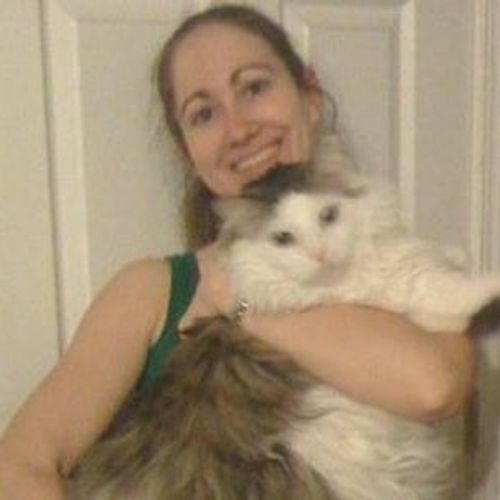
Tyler the Bobcat & Special Needs Wildlife Rehab with Moon Taylor
What happens to wild animals that suffer injuries so severe they can never return to the wild? In this episode, host Dixie sits down with licensed wildlife rehabilitator Moon Taylor, founder of Spiritual Wildlife Rescue and Rehabilitation Sanctuary, to explore the intensive care required for special needs wildlife. Moon shares the heart-wrenching yet inspiring journey of Tyler, a famous rescue bobcat who survived severe trauma as a kitten and became the foundation for her sanctuary's mission. Together, they dive into the complex world of wildlife rehabilitation, discussing the critical differences between state permits and USDA Class C/T licenses, the reality of soft vs. hard releases, and why bobcats—no matter how sweet they seem—never make good house pets.
Connect: To support Moon’s sanctuary, follow Tyler's journey, or make a tax-deductible donation toward special medical care and custom diets, visit tylerthebobcat.org or search Tyler the Bobcat on Facebook, YouTube, and TikTok.
About Animal Posse 🐈
Welcome to Animal Posse! We share heartwarming stories and crucial insights to make a real difference for animals in need. As a project of the Unwanted Feline Organization, we are a community of animal lovers dedicated to rescue, advocacy, and education. This podcast does not provide medical, veterinary, or professional advice.
Like, Share, and Subscribe to save lives through community, one rescue at a time!
📌 Disclaimer
This show is for entertainment and general discussion only. The experiences, opinions, and information shared by our guests are their own, do not reflect the position of the show and are not intended as veterinary advice. This content should not be used as a substitute for professional diagnosis, treatment, or guidance. Always consult a licensed veterinarian regarding your pet’s health or any medical concerns.
Transcript
Welcome back everybody.
2
:Today we have a very special guest whose
life work is all about giving a voice to
3
:creatures that can't speak for themselves.
4
:If you follow Wildlife Rescues on
social media, you've likely seen
5
:the incredible heartwarming bond
between a licensed rehabber and
6
:a very famous bobcat named Tyler.
7
:Joining us today is Moon Taylor.
8
:She is the founder of Spiritual Wildlife
Rescue and Rehabilitation Sanctuary.
9
:She is a licensed wildlife rehabilitator
with many years of experience
10
:rescuing, healing, and advocating for
native wildlife and exotic species.
11
:Hi, Moon..
12
:Welcome to the show.
13
:Moon: Thank you.
14
:I'm glad to be here.
15
:Dixie: I'm super excited to hear
about Tyler the Bobcat, and then
16
:also what you do with your nonprofit.
17
:Moon: Okay.
18
:Dixie: To start, can you share a bit
about your background with our listeners?
19
:What drew you into wildlife
rehabilitation, and how did your
20
:journey in animal rescue begin?
21
:Moon: I'm a farmer's daughter.
22
:I grew up on a farm, and out being in
the farm, we had all kinds of animals,
23
:and I've always had the passion for it.
24
:So when I moved to Texas, I wanted
to continue that passion, and I
25
:made my passion geared towards
the special needs wildlife because
26
:they need a lot of hands-on.
27
:They need that compassion, that extra
care that a lot of rehabbers cannot give.
28
:So when you say special needs
wildlife, what do you mean by that?
29
:You'll have wildlife that comes
in with burns and, or a severe hip
30
:injury or a head injury, and sometimes
they're deemed non-releasable.
31
:That means they stay in
your facility forever.
32
:Like Tyler, when he came in as
a baby, he was literally-- him
33
:and his mom was captured by some
hunters, and they killed his mom.
34
:They put him in this little cage, and
they let dogs torture him through the cage
35
:where it deformed his paws, tore open his
eye and his back, and I had to do a lot
36
:of hands-on for Tyler to save his life.
37
:And during that time, he
became very imprinted.
38
:He had to have surgeries on his
paws in order for him to walk.
39
:There's been other bobcats that
have came in, like with the burns.
40
:A lot of hands-on there with
nurturing and caring for them.
41
:The trauma head injuries, it's
usually, because they've been hit
42
:by a car Those type of special needs
43
:Dixie: I've spoken with a few other
wildlife rehabilitators and typically
44
:what they'll do is, if somebody finds
say a raccoon that's injured in the
45
:city, baby possums, those types of
things, they'll rehabilitate them, and
46
:then they release them back in the wild.
47
:With the special needs
cases, is that different?
48
:I know you still have Tyler.
49
:Yes.
50
:So for the other ones that you get, do
most of them have to live out their life
51
:with you, or do you have the ability to
reacclimate and release some of them?
52
:Moon: That's a case-by-case scenario.
53
:The vet determines if they can be released
back into the wild or if they cannot.
54
:If they are released back into the
wild, I have several friends and
55
:attorneys and vets that own farmland.
56
:They get to be released on the
farmland where they've got shelter,
57
:like a barn to go into, creek
to have water and to fish with.
58
:We've got cameras there to help
protect them, and then we also
59
:provide extra food to make sure
that they're not going hungry.
60
:But we make sure that they're very well
protected and no hunting is allowed.
61
:But each case is, per the
vet's de- determination.
62
:Sure.
63
:And if they are considered non-releasable,
then yeah, they spend their life with
64
:me, or if there's another sanctuary
that's willing to take in a special
65
:needs to have as an educational
animal, they are welcome to go there.
66
:Dixie: The name of your rescue
is Spiritual Wildlife Rescue
67
:and Rehabilitation Sanctuary.
68
:So-
69
:Moon: Yes
70
:… Dixie: tell us when you started when
you became a 501[c][3], and I also love
71
:your name, so I'd like to hear more
about how you settled on that name too.
72
:Moon: I came upon Spiritual
Wildlife Rescue and Rehabilitation
73
:Sanctuary because my parents
are Indian, Apache and Cherokee.
74
:And my tribal family helped
guide me to choose what I felt
75
:comfortable, what was a calling.
76
:As to becoming a 501[c][3], I started
back, way back in:
77
:Dixie: I see too that you have a
USDA Class C and Class T license.
78
:What does that mean?
79
:Moon: Yes.
80
:I am state and federal
Texas wildlife rehabber.
81
:I am also a Texas state
educational instructor and trapper.
82
:My USDA Class C and T.
83
:My Class C means I can have all kinds
of exotics, anywhere from mountain lions
84
:to cougars to pumas to bears to wolves.
85
:It means I can help transport them.
86
:I can take them in and bottle feed them.
87
:I can get them to other states.
88
:My Class T is a transporter's license.
89
:That means I can transport any pl-
any animal I want to any state.
90
:Dixie: That's very interesting 'cause
I knew at the state level you needed to
91
:have the wildlife rehabilitation licenses.
92
:Yes.
93
:But I didn't realize that there
were certain ones that you
94
:needed to get from the USDA too.
95
:, Like this USDA Class C for the exotics,
if somebody- … in another state was--
96
:interested in getting into wildlife
rehabilitation, is that a license
97
:that they would also need to get,
or is it on a state basis as well?
98
:Moon: A lot of states don't
mandate that you have it.
99
:They just mandate that you have
their state wildlife license.
100
:Me, I prefer to have both my
state and my federal license to do
101
:wildlife, but I also wanna have that
USDA license because it helps guide
102
:extra protection for the animals.
103
:Dixie: It sounds like you've , an
incredible level of lifelong dedication
104
:'cause you started out decades ago,
especially like when mentors and
105
:resources were a little bit more scarce.
106
:So- Yes … you had a
deep love for animals.
107
:How did you learn to do the rehab?
108
:Moon: As I said, growing up on the farm,
yeah, we had the basic farm animals,
109
:but we always had baby deer coming up.
110
:We had raccoons, possums out there,
and, every so often out on the farm, we
111
:would see a mountain lion or a cougar.
112
:It's-- My dad knew that it broke my
heart if he saw, tried to kill them,
113
:protecting the animals and stuff.
114
:So we took the passion of finding
ways to deter them away from the
115
:farm animals, but also making it a
way where those animals could have a
116
:safe sanctuary on our farm back home
117
:Dixie: I'd like to talk a little
bit about Tyler, 'cause- Okay
118
:Tyler is a little bit of
a social media sensation.
119
:Moon: Thank you.
120
:Dixie: You described how
he came into your life.
121
:How old was he when you got him?
122
:Moon: When I got Tyler, he was only maybe
two months old, and he's a big boy now.
123
:He is the one that basically
started the foundation towards
124
:s- the special needs animals.
125
:Dixie: Yeah, that's what I was actually
gonna ask you, if he was your first
126
:Yes … lifelong resident that was gonna
live with you under the special needs.
127
:Moon: Yeah.
128
:He's the one that was basically
the foundation that started
129
:the special need rescue.
130
:Dixie: He had all of these issues,
you said, with his his paws being
131
:deformed from the dogs attacking him.
132
:How much time did you have to
spend rehabilitating him, and what
133
:did he need to get done by a vet
in terms of surgeries and stuff?
134
:Moon: Part of his back was torn open.
135
:His one eye was literally almost
torn out of the eye socket.
136
:We had to sew his back.
137
:We had to sew his eye back in and
hope that he wouldn't lose his sight.
138
:His paws were literally, instead
of facing forward, they were facing
139
:almost completely back, so he had to
have surgeries to start forming them
140
:forward, and it would take, some plates.
141
:It would take pins.
142
:And it wasn't just one surgery.
143
:He had to have multiple surgeries.
144
:I had to do therapy with him.
145
:We went through a long journey.
146
:It was a lot of hands-on with cleaning
his bandages, every 20 to 30 minutes to
147
:make sure that they wouldn't get infected.
148
:There was times that I thought
he was gonna give up on me.
149
:Dixie: I can't imagine the
poor guy going through that
150
:it's something that's hard to even
wrap your head around, that he could
151
:have been gone through that to have
to- Yeah … to go through all those
152
:surgeries and all that intensive care.
153
:Moon: Yeah.
154
:I'm glad he did
155
:… Dixie: with him being like you said,
two months old, … I would imagine
156
:that is a little bit an older age, if
you were to find a bobcat out in the
157
:wild that didn't go through all this
trauma that he went through, that a
158
:bobcat- that would be two months old
would almost pretty much be wild.
159
:Of course, you would still have to
teach him how to be a bobcat, but
160
:how is Tyler different from that,
that he was able to imprint on you?
161
:Moon: Because of all the hands-on.
162
:I was constantly k- have to hold
him up against my body for warmth.
163
:He would not stay in his incubator.
164
:He would not lay on heating pads.
165
:If I even put him down just for a
minute to make his bottle, he would
166
:cry, he would yell, and as soon as I had
picked him up, he would cuddle into me.
167
:So I literally had to put him
in a little pouch and carry him
168
:around like a kangaroo mama.
169
:It was the only way to
comfort him, and it…
170
:As long as he stayed calm, and as long
as he stayed comfort, he was willing to
171
:eat, he was willing to take his medicine.
172
:But the moment that I was out
of his sight, he became scared.
173
:He just wanted to cry, and
you couldn't blame him.
174
:He was traumatized so much.
175
:So would you consider him now to be,
more behavior-wise like a house cat?
176
:Bobcats are never like a house cat.
177
:They can have their d- one minute, their
sweet little pleasure of purring and
178
:looking at you, and within a second,
they can still turn right around and
179
:use those sharp claws and teeth on you.
180
:But Tyler yeah I still say he's special,
but you still have that protection there.
181
:Dixie: What does a typical day look
like living alongside him as, in
182
:terms of like enrichment, diet,
territory, and safety protocols?
183
:Moon: With Tyler, every
day is an amusement.
184
:He will literally take the doggy's
c-cot from the dog, and when the dog
185
:wants its bed, Tyler will look up
like whatever and go back to sleep.
186
:If the dog's trying to take the blanket
and get him off of it, Tyler's like
187
:hissing at him like it's his bed now.
188
:He will not get off that doggy cot until
he's ready, and the dog has learned that.
189
:When it comes to making his food,
he will literally walk around you.
190
:He will do a large meow and yowl because
he knows his feeding schedule, and then
191
:he goes and he sits on the counter,
and he sits there and he watches you
192
:make his food until that plate is ready
193
:He will supervise everything
194
:And what do you feed him?
195
:His-- Right now, I pick
up his special diet food.
196
:It's a carnivore meat that all
the zoos use for the carnivores.
197
:They're same, the tigers,
the bobcats, and stuff there.
198
:So I order the special cases.
199
:It's delivered to the zoo.
200
:I can either pick it up at the
Dallas Zoo or the Fort Worth Zoo.
201
:But it already is custom-made.
202
:It has all the supplements in it.
203
:And this way, I know he's getting
the proper enrichment that his
204
:body and his species needs.
205
:Dixie: I'm sure a lot of people
see the videos and see how cute
206
:he is, and they all think, "I
wanna go out and get a bobcat."
207
:So can you explain to people why that's
something that they should not be doing?
208
:And also, just because you do need
to have some specialized training,
209
:'cause like you said, he is a
lot different from a house cat.
210
:So just because you're used to
dealing with cats does not mean you'd
211
:be used to dealing with a bobcat.
212
:Moon: One, it's against the law in a lot
of the states to own any type of wildlife.
213
:You have to have a special license to
have any type of wildlife or exotic.
214
:Two, the reason why I specialize
in these animals is because, like
215
:I said, one minute they can give
you this sweet purring sound, this
216
:cute, innocent look, and within a
second, they can slice you open.
217
:Their demeanor will change for no reason.
218
:It could be because of a certain sound.
219
:It could be a smell.
220
:It could be something that just
stressed them out immediately
221
:that you were not aware of.
222
:They can be extremely destructive on your
house, too, by clawing up the furniture.
223
:Their claws can actually tear up walls
224
:And that seems to be their favorite thing.
225
:Yeah, they will use a cat tree,
but you give a, a bobcat a wall,
226
:they're gonna go after it and
use it as their scratching post.
227
:Dixie: Yeah, I can't imagine having
just regular cats and seeing the things
228
:that a cat'll do, like to a doorframe.
229
:I can only imagine what a
bobcat would do to your wall.
230
:Moon: And with a lot of the
wildlife and exotics, they're used
231
:to using the outside to go potty.
232
:I am blessed that I am able to train
the bobcats and all of them to use
233
:a potty box, and some of them I've
even trained to use the toilet.
234
:So what other residents do you
have in your care right now?
235
:Right now I just have the bobcats.
236
:I've got the four baby bobcats that
came in that had burns on them.
237
:They are about four months old.
238
:They are completely over their
burns, and we're getting their
239
:dietary and their nutrition up.
240
:So hopefully they can go back out
into the wild if the vet deems it
241
:And how many do you
normally take in a year?
242
:That bases on different calls.
243
:There's been a couple of times
that for a whole year I'd
244
:only get maybe two or three.
245
:This year, the calls have
been really coming in where
246
:I've had over 20 some calls.
247
:It's just been a little crazy this year.
248
:Dixie: Do you focus primarily just
249
:on Texas, or will you take them
in from other areas as well?
250
:Moon: That depends on the protocol
and the ba- the case scenario.
251
:I have had calls from other states
from rehabbers that got in a bobcat,
252
:and they've called me and asked
me if I could guide them and train
253
:them on how to do a bobcat because
they've never done it before, and
254
:I have educated them through Zoom.
255
:There's been times that they would
come in twice a month, do some
256
:hands-on training with me, and
go back to their own facility.
257
:Dixie: Another thing that I'd like
to ask you about is I heard that for
258
:rehabbers that do bobcats, that you
need special enclosures for them.
259
:Moon: Yes.
260
:Dixie: What type of enclosure do
you need for a bobcat to be secure?
261
:Moon: That is based on the aging.
262
:If you're talking an adult bobcat,
the outside enclosure should meet
263
:the state guidelines, and again,
each state is different by their
264
:guidelines on the size the same as USDA.
265
:My outside enclosure are twenty-four
by twenty-four, and it's this,
266
:the galvanized chain fencing.
267
:It goes completely underneath.
268
:There's ground and g- the grass put above
it, so that way they can't dig under.
269
:It's all the way around the sides.
270
:It's got the roofing.
271
:There's also AC and heating, hooked up,
so that way they've got ventilated areas.
272
:I make sure that the
animals stay c- comfortable.
273
:With the new little ones
274
:Dixie: that you have, the four-month-old
ones, are those out in their enclosure,
275
:or do you bring them in your home as well?
276
:Moon: No, those are in a special
room with the same type of enclosure,
277
:because like I said, they are g-
they just got over their burns.
278
:And even though they're over their burns,
we still have to make sure that their fur
279
:is growing in properly to protect them.
280
:And once the vet says, yes, they can start
going outside more, then we will start
281
:introducing them to the outdoor closure.
282
:But right now, we try to keep
everything on a sterile basis for them.
283
:Dixie: When they go into their
outdoor enclosure, how long do
284
:they normally have to stay in that
before they're okay to be released?
285
:Moon: That is based on the time
of the year that they come in.
286
:Because these babies are
only four months old,
287
:they probably would not be
releasable until February of
288
:next year to March of next year.
289
:You always wanna make sure that they are
released in the beginning of a summer
290
:when it's cool but not too hot, so that
way they have a chance to build their own
291
:den, learn to hunt, learn the territory,
so they can survive and be prepared for
292
:the winter that they're about to come.
293
:Dixie: Wow.
294
:So you'll have those babies almost all
the way through next year then even if
295
:the vet says that they are releasable?
296
:Moon: Yeah.
297
:I- it's like that with any wildlife.
298
:You don't wanna release them
until they're at least a year old.
299
:You've gotta give them time
to accept the environment.
300
:You never wanna release any
wildlife in the fall or the winter.
301
:They wouldn't survive.
302
:Dixie: Wow.
303
:Yeah I don't think a lot of
people think about that in
304
:terms of when you take 'em in.
305
:I think people think that for a
lot of wildlife rehabbers, you
306
:take 'em in, you heal 'em up,
and you let 'em go right away.
307
:And so it's a quick turnaround.
308
:I knew you would have
'em for several months.
309
:I didn't realize that it
could possibly be that long.
310
:Moon: Yeah you gotta make sure
that they're the right age.
311
:You gotta make sure that they
know how to hunt, they know how
312
:to seek out their prey, they're
able to adapt to the environment.
313
:That's the reason why I have the
private land, because at the same
314
:time we go out there, we got what's
called a soft release, we got
315
:what is called the hard release.
316
:The soft release means we take
them out, they're put in a large
317
:cage kennel area out there.
318
:They're learning how to hunt live
prey that's put in there with them.
319
:They're getting used to the surroundings,
the different environments out there.
320
:And then the hard release is
where you finally open up that
321
:cage, you cry your eyes out, and
you watch 'em run and be free
322
:And do they tend to stay around in
the area where you release them?
323
:A lot of them have because w- that's
where the game cameras come in, is we
324
:can see that they're still coming up.
325
:They're, checking out the barns
to h-hide in to have protection
326
:from the cold or the rain.
327
:We can see them out at the creek hunting
and playing in the water, running across
328
:the fields chasing a rabbit or a bird.
329
:I love the game cameras because to me
it says they're safe, they're hunting,
330
:they're living wild, they're being free.
331
:Dixie: Yeah, you get to
see how they're doing.
332
:Moon: Yeah.
333
:And they're v-- they stay
protected, and that's what matters.
334
:Dixie: With Tyler, you use Tyler
a lot for educational outreach.
335
:Moon: Yes.
336
:Dixie: What is the most important message
or common misconception you want to
337
:share with the public regarding wildlife?
338
:Moon: The one thing that I'm always
saying that wildlife is not a pet.
339
:It is illegal to own them.
340
:You should leave it up to the trained
wildlife rehabbers that are licensed
341
:and trained to care for them.
342
:If you find any wildlife that's in
need, whether it's an orphan or injured,
343
:immediately reach out to a rehabber.
344
:That's the best way they're gonna survive
345
:Now, as a rehabber, do you do
any kind of continuing education?
346
:Yes.
347
:I've done education to other
rehabbers in other states.
348
:I had a young lady that was in
Honduras that the government seized
349
:a fox from somebody over there.
350
:So I reached out to the government,
and with a three-hour phone call
351
:convincing, I managed to start a
rehab facility over in Honduras.
352
:Dixie: Wow.
353
:That's amazing.
354
:Moon: Yeah I'm glad that she
still keeps an eye on the fox
355
:and she still reaches out to me,
356
:Dixie: and how long has that been?
357
:Moon: That was a year and a half ago
358
:Dixie: For any of our listeners who
want to support Spiritual Wildlife
359
:Rescue and follow Tyler's journey or
donate, how can they find you online?
360
:Moon: On Facebook, I am Spiritual Wildlife
Rescue and Rehabilitation Sanctuary.
361
:On TikTok, YouTube, all of the social
media, I am Tyler the Bobcat, and
362
:I also have tylerthebobcat.org.
363
:It's his website.
364
:And what would be the most,
365
:Dixie: What do you need the most
366
:Moon: myself and many rehabbers, monetary
donations are the biggest gift of all
367
:because that monetary donation goes
towards buying their special food,
368
:their vet bills, their medication.
369
:Tyler has special medication
that he needs, especially when
370
:the weather keeps changing.
371
:His paws do hurt because he does have
arthritis, and pain movement in there,
372
:and he's gonna have it all of his life.
373
:So when it gets to bothering him,
he lets me know, and he does have
374
:special medicine, and it is expensive
375
:Dixie: Moon, thank you so much
for taking the time to share your
376
:story with us today, and thank
you for all the incredible work
377
:that you and your sanctuary do.
378
:And to all of our listeners, you can
head on over to tylerthebobcat.org
379
:to support their mission.
380
:And thank you again, Moon.
381
:It was great to hear Tyler's story,
and it was a very unfortunate
382
:beginning for him, but I am very
glad that he ended up in your care.
383
:Moon: And thank you for having us.